
Forensic speaker identification
What forensic speaker identification is, why it needs expert knowledge, and what an examiner listens for.
What is forensic speaker identification?
Forensic Speaker Identification (FSI), or forensic speaker recognition, refers to the process that identifies if two or more speech recordings are from the same speaker. FSI is a part of forensic phonetics, which is the application that deals with the subject of phonetics. Phonetics allows the forensic audio examiner to observe areas focused on how people speak, how speech is perceived and how it is transmitted acoustically.
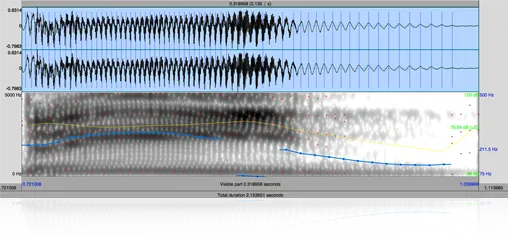
The forensic comparison of voice samples is an extremely complex process and requires expert knowledge in several different specialty areas related to speech science. In its most common form speaker identification involves the comparison of one or more samples of an offender’s voice with one or more samples of the suspect’s voice.
What does a forensic phonetician listen for?
When a forensic phonetician compares and describes voices, he or she usually does so with respect to linguistic units, especially speech sounds, like vowels or consonants. A forensic phonetician may observe for instance that the “ee” vowels in two samples are different. The way speech sounds are produced, articulatory phonetics, plays an equally important part in the process of identification.
Phonemics (speech sounds called phonemes) deals with how speech sounds are functionally organised in the language. For instance in the English language the vowel in the word “beat” and the vowel in the word “bit” exhibit different phoneme behaviour because, amongst other things, one vowel is shorter than the other.
How much information is in a voice?
There are many other areas in which a forensic audio examiner is dealing with which is beyond the scope of this mini introduction to FSI. Voice is more than just a string of sounds. There’s a great deal of information that is transmitted when a voice is spoken. For most people when they hear a voice, they can identify the sex of the voice, the language that was spoken and in some cases the emotional state of the speaker. You don’t even need to speak a particular language in order to understand the emotional state of the speaker.
However for a forensic audio examiner there’s a wealth of information hidden in voices and this data is collected, observed, documented, compared and processed for FSI.